I have been applying mehndi for over ten years, and I have seen the same heartbreaking scenario hundreds of times.
A bride sits patiently for six hours while I apply an intricate, beautiful design. She loves it. But the next day, she calls me in a panic because when she washed it off, the stain was bright pumpkin orange instead of deep mahogany red.
If this has happened to you, don’t worry. You didn’t necessarily get a bad cone.
Here is the truth that most beginners don’t know: applying the henna is only 50% of the work. The other 50% is aftercare.
Natural henna is not a paint; it is a plant-based dye that needs heat, moisture, and time to oxidize with your skin. If you treat it right, you can turn a faint orange stain into a rich, dark maroon overnight using only natural ingredients from your kitchen.
Here are my 7 proven steps to getting that perfect, dark stain safely.
A Quick Safety Warning Before We Begin
Before we talk about darkening, we must talk about safety.
Natural henna is NEVER black.
If you see “instant black henna” cones in a store that promise a dark stain in 20 minutes, do not use them. They often contain PPD (para-phenylenediamine), a dangerous chemical found in hair dye that can cause severe burns and permanent scarring.
Real, natural henna always starts orange and takes 24-48 hours to darken. The tips below are for safe, natural henna only.
1. The Lemon and Sugar Sealant (The Holy Grail)
This is the single most important step for a dark stain.
Henna stops dyeing your skin the moment it dries out and cracks. To get a deep color, you need to keep the paste moist against your skin for as long as possible.
We do this by creating a sticky, natural glue.
The Magic Recipe:
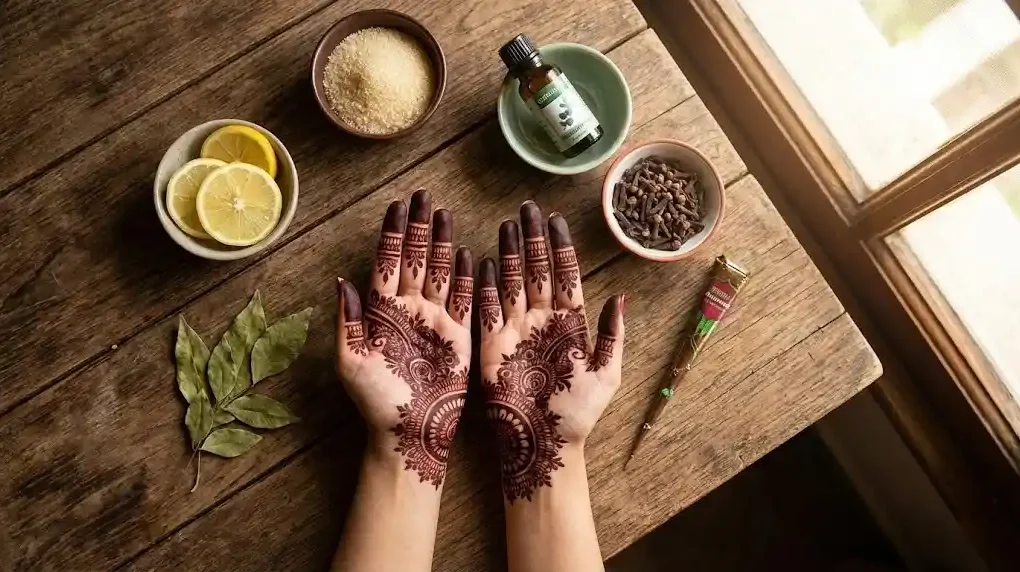
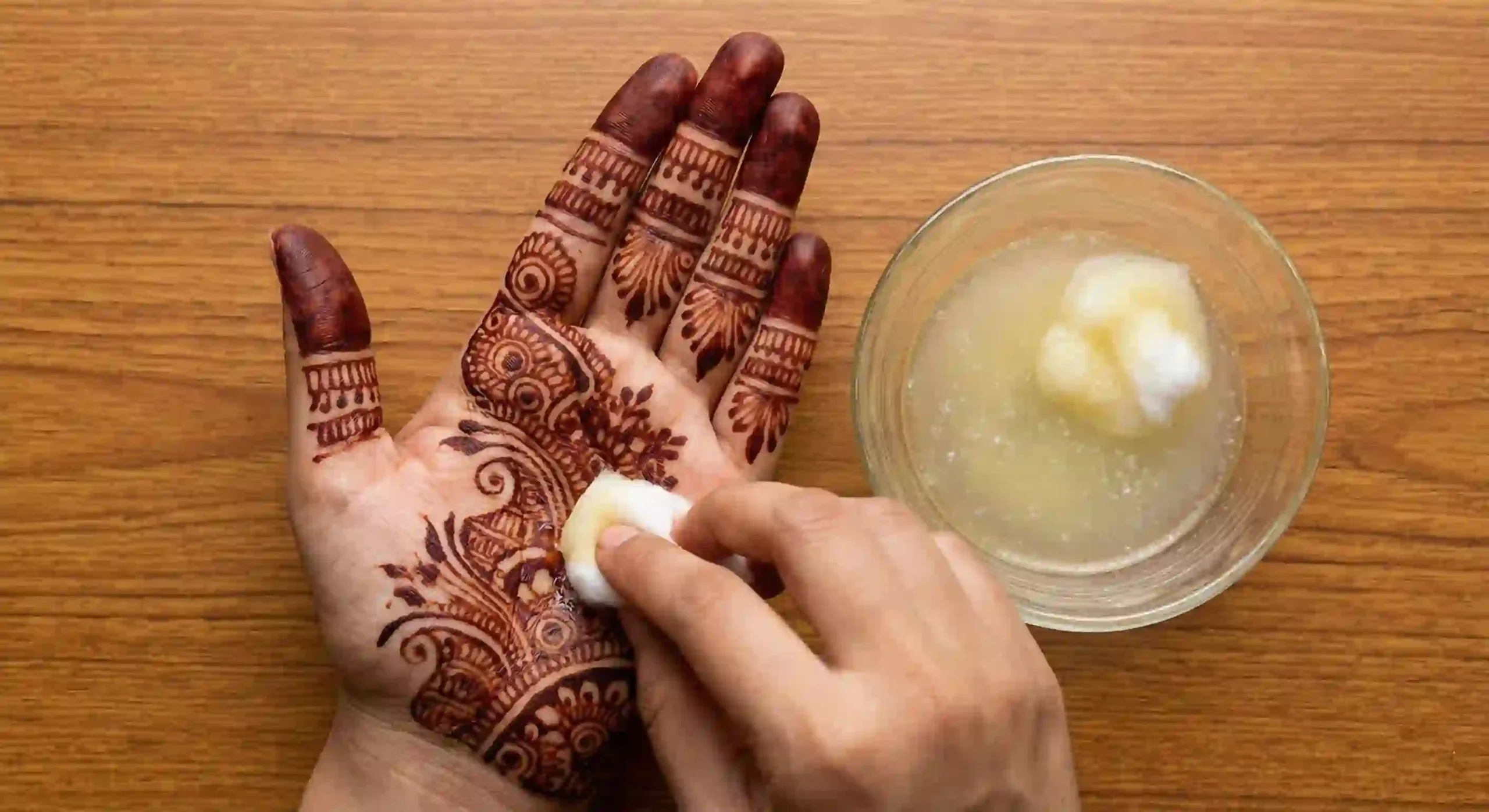
- 1 Teaspoon of lemon juice
- 2 Teaspoons of sugar
Mix these in a small bowl until the sugar dissolves into a sticky syrup.
Once your mehndi is completely dry to the touch (usually 20 to 30 minutes after application), dip a cotton ball into the mixture. Gently dab it over your dried design. Do not rub, or you will smudge the patterns.
The sugar makes the paste stick to your skin so it doesn’t flake off, and the acidity of the lemon helps release the dye molecule (lawsone) deeper into your skin.
2. The Clove Smoke (Bhaap) Method
This is an ancient, traditional technique used by grandmothers for generations. It is called Bhaap (steam) or Sek (heat).
Heat activates the henna dye. By warming your hands over clove smoke, you are helping the stain penetrate deeper.
How to do it:
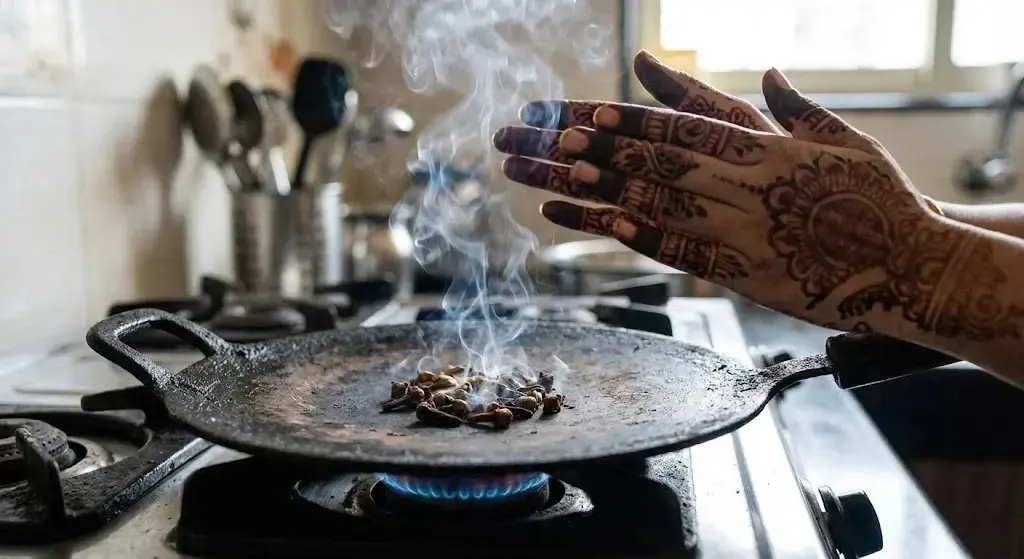
- Place 5-6 whole cloves (laung) on an old iron tawa or frying pan.
- Turn on the stove heat until the cloves start to smoke.
- Carefully hold your palms a few inches above the smoke so you feel the warmth. Keep moving your hands so they don’t get too hot in one spot. Do this for just a minute or two.
Warning: Please be careful. You want the gentle warmth of the smoke, not the intense heat of the fire. Do not burn yourself.
3. The 12-Hour Water Rule
This is the hardest rule to follow, but it makes the biggest difference.
Water is the enemy of a fresh henna stain.
If you wash your hands with water immediately after taking the paste off, you stop the oxidation process instantly. Your stain will remain light orange forever.
You must avoid water completely for at least 12 hours after removing the paste. Ideally, try to go 24 hours.
If you need to shower, wear a glove or wrap your hand in a plastic bag with a rubber band at the wrist. If you need to wash your face, ask someone else to do it for you, or use a face wipe.
4. Scrape, Don’t Wash
So, if you can’t use water, how do you get the dried paste off?
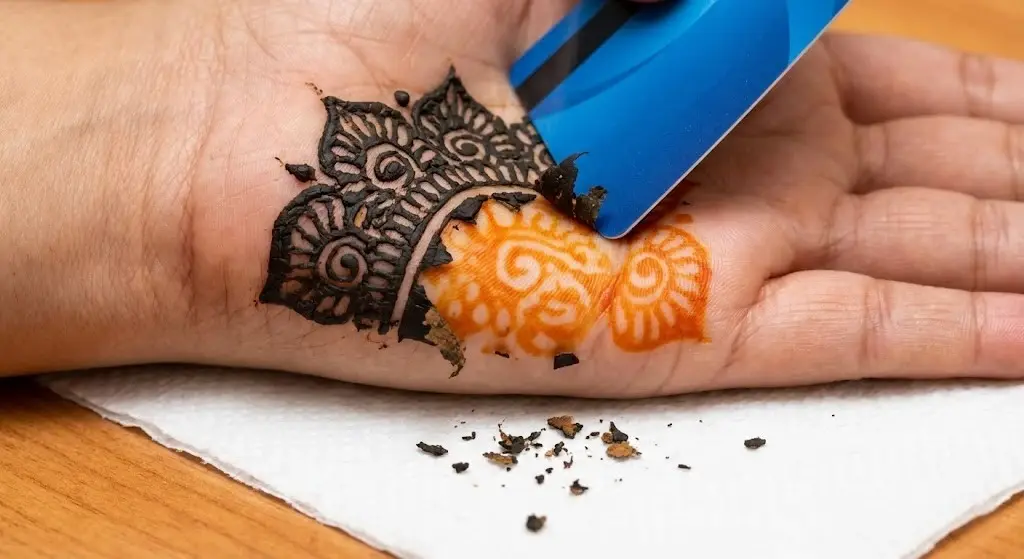
After you have kept the paste on for at least 6 to 8 hours (sleeping with it on is best!), you need to remove it dry.
Never run your hands under the tap to remove the crust.
Instead, rub your hands together over a trash can or newspaper. The dried paste should crumble off. For stubborn bits stuck to your skin, take a butter knife (use the dull side) or an old credit card and gently scrape them off.
If it is really stuck, apply a little bit of coconut oil or mustard oil to loosen it up.
5. Keep Your Hands Warm
Remember, henna dye is heat-activated. If your body temperature is cold, the stain will not develop well.
This is why mehndi applied in the summer always looks darker than mehndi applied in the winter.
If you are getting henna done for a winter wedding, stay warm. Sit near a heater, drink hot tea, and keep your hands wrapped up after the paste is removed. The warmer your blood runs, the darker your stain will be.
6. Apply a Menthol Balm
Once all the paste is scraped off and you are left with that bright orange stain, apply a balm that contains menthol.
Vicks VapoRub or Tiger Balm are perfect for this.
The menthol stimulates blood circulation to the surface of your skin. More blood flow means more heat, which helps darken the color rapidly over the next few hours.
7. Common Mistakes to Avoid
Sometimes, getting a dark stain is less about what you do and more about what you don’t do.
To ensure the best results, avoid these common pitfalls:
- Don’t use a blow dryer: Never try to dry wet henna with hot air. It dries the paste too quickly before the dye has time to sink into your skin. Natural air drying is best.
- Don’t wash with soap: Even after the 12-hour water rule has passed, try to avoid harsh soaps or hand sanitizers for a day, as they strip the skin’s natural oils and fade the stain faster.
- Don’t wax or shave afterwards: Removing hair takes the top layer of skin cells with it, right where your henna stain is sitting. Do all your hair removal before applying henna.
Conclusion: Be Patient
The final secret to a dark henna stain is patience.
When you first scrape that paste off, the stain will be bright orange. Do not panic. This is completely normal for natural henna.
Over the next 24 to 48 hours, as the stain is exposed to oxygen, it will deepen from orange to red, and finally to that rich, dark brown you desire. Trust the process, follow these tips, and you will have a stunning stain that lasts for weeks.