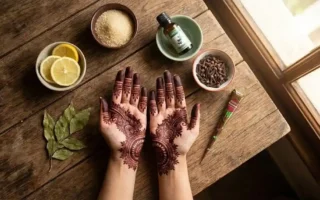
We all love the deep, rich maroon stain of fresh Mehndi. It looks stunning for weddings, Eid, and Karwa Chauth. But let’s be honest, that love affair ends about a week later.
You know the phase I’m talking about. The design has started to crack. The rich brown color has faded into a patchy, bright orange mess. It looks less like a beautiful art form and more like a skin condition or a dirt stain.
If you have an important meeting, a job interview, or school coming up, you probably want that fading henna gone yesterday.
As a skincare consultant, I see many people making the mistake of scrubbing their hands raw with harsh chemicals. Please don’t do that. Your skin is delicate.
Here is the truth about how henna works, and 5 safe, effective ways to speed up the removal process without damaging your hands.
The Science: Why Is Henna So Hard to Remove?
Before we start scrubbing, you need to understand what is happening on your skin.
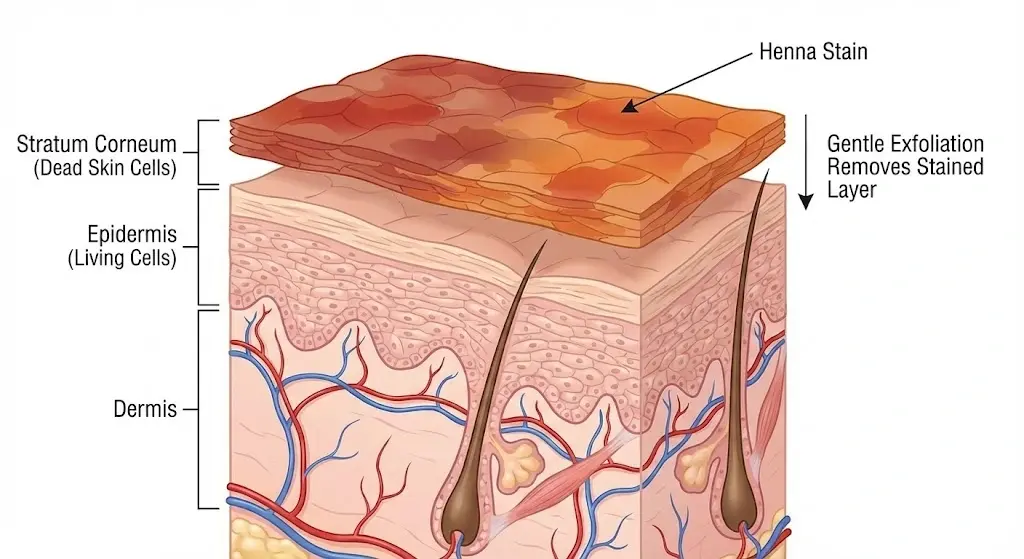
Henna contains a dye molecule called Lawsone. Unlike a marker pen that sits on top of your skin, Lawsone binds with the keratin proteins inside your skin cells. It literally stains the top layers of your epidermis.
This means you cannot “wash” henna off. You have to wait for your skin to naturally exfoliate (shed dead cells) and replace them with new ones. This usually takes 2-3 weeks.
However, we can speed up this shedding process. By using safe exfoliants and softeners, we can encourage the stained layers of skin to slough off faster than usual.
Method 1: The Salt Water Soak (The “Softener”)
This is the gentlest method and the best place to start. Salt is a natural detoxifier, and warm water helps soften the skin cells, making them easier to exfoliate later.
Best for: People with sensitive skin or extensive designs on both hands and feet.
How to do it:
- Fill a large bowl with warm water (not scalding hot).
- Add half a cup of sea salt or Epsom salt.
- Soak your hands in the water for 20–30 minutes.
- While soaking, gently rub your hands together.
Why it works: The salt water causes a process called osmosis. If you have ever stayed in the bath too long, you know your fingers get “pruney.” This softening loosens the bond of the dead skin cells. After you dry your hands, you will notice the henna looks lighter.
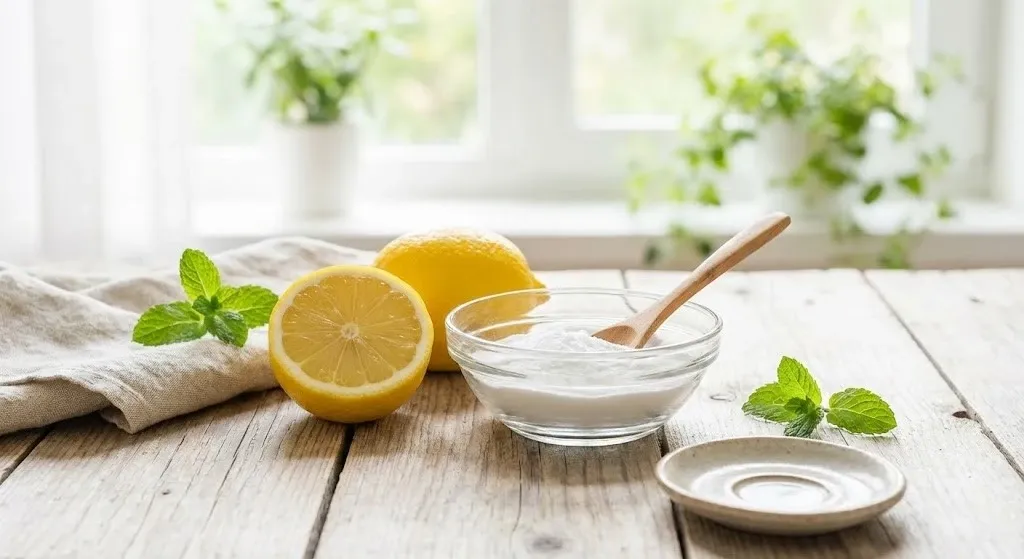
Method 2: Lemon and Baking Soda Paste
Lemon is nature’s lightening agent because of its citric acid/Vitamin C content. Baking soda is a mild abrasive. When you combine them, you get a powerful, fizzy scrub that works wonders on stains.
Best for: Stubborn, dark stains on the palms.
How to do it:
- In a small bowl, mix 2 tablespoons of baking soda and 1 tablespoon of lemon juice.
- It will fizz! Mix it until it forms a thick paste.
- Apply the paste over the henna design using a cotton pad or your fingers.
- Let it sit for 10 minutes until it dries.
- Gently scrub it off in circular motions using a loofah or washcloth.
- Rinse(use water to clean the soap) with warm water.
Caution: Lemon can be drying. Do not use this if you have cuts or eczema on your hands.
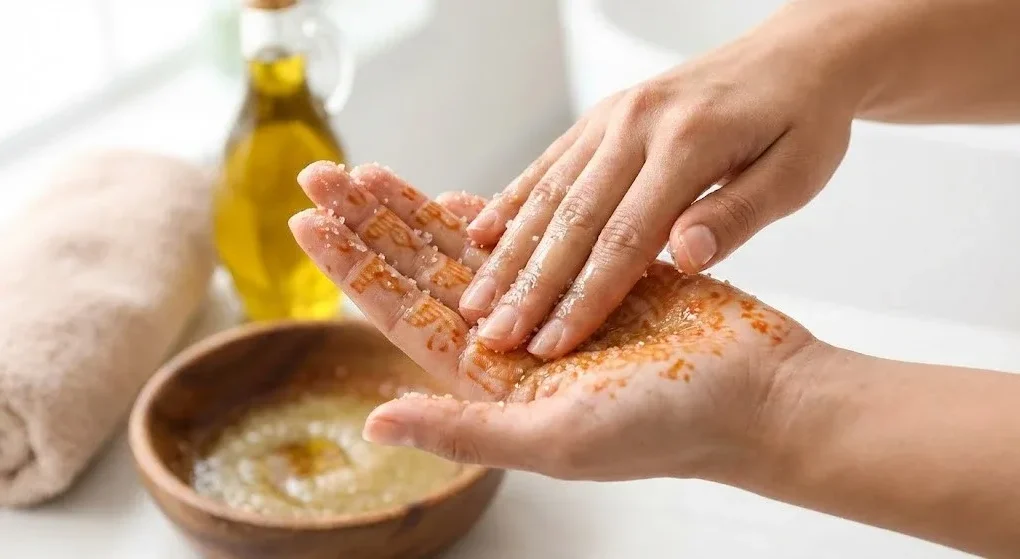
Method 3: Olive Oil and Salt Scrub (The “Moisturizing Scrub”)
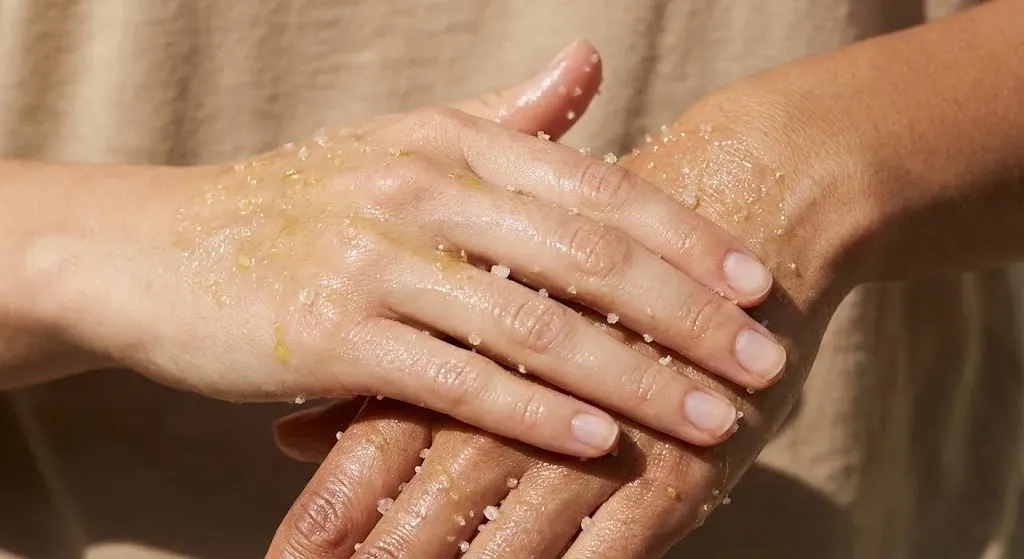
If Method 2 sounds too harsh for you, this is the perfect alternative. This is essentially a DIY spa treatment. The salt acts as a physical exfoliant to scrape away the dye, while the olive oil protects your skin barrier.
Best for: Dry skin or removing henna from the back of the hand (which is thinner than the palm).
How to do it:
- Mix 3 tablespoons of olive oil (or coconut oil) with 2 tablespoons of sea salt.
- Massage this mixture onto your hands vigorously for 5 to 10 minutes.
- Focus on the areas with the darkest stains.
- Leave the oil on for another 10 minutes to soak in.
- Wash off with soap and warm water.
Why it works: The oil helps dissolve the pigment while the salt physically buffs away the dead skin cells that are holding the color. Plus, your hands will feel incredibly soft afterwards!
Method 4: Whitening Toothpaste (The “Minty” Hack)
It sounds strange, but think about it: Whitening toothpaste is designed to remove stains from the enamel of your teeth using mild abrasives and detergents. It works surprisingly well on skin stains, too.
Best for: Removing small, specific mistakes or fingertip stains.
How to do it:
- Apply a generous layer of whitening toothpaste over the henna. (Avoid gel toothpaste; use the white paste kind).
- Let it dry completely (about 15 minutes).
- Once dry, dampen your hands and scrub the toothpaste off.
- You can use an old toothbrush for extra scrubbing power, but be gentle!
Method 5: Micellar Water (The “Face Safe” Option)
Did you get henna on your face (perhaps from resting your chin on your hand while sleeping)? Or maybe you have incredibly sensitive skin?
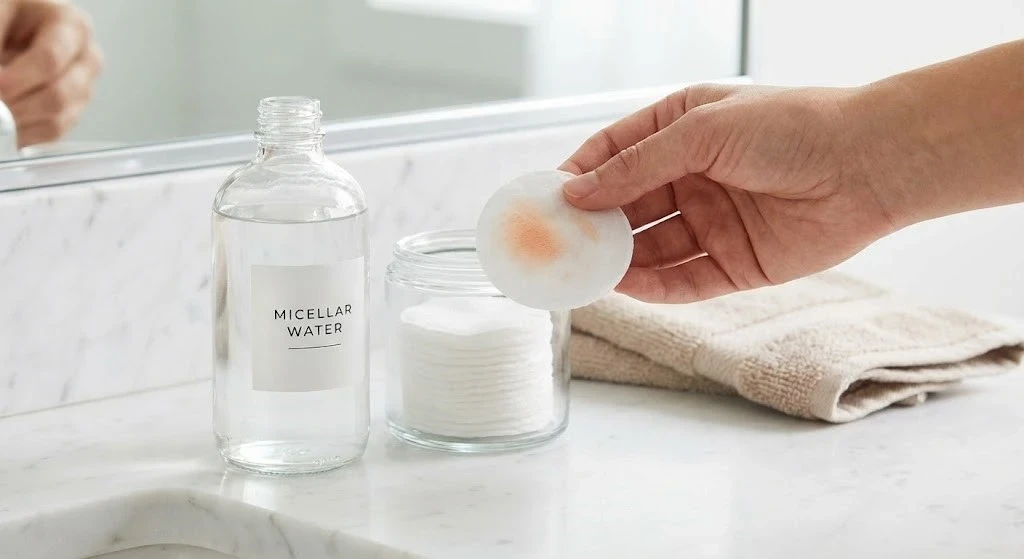
Do not use lemon or toothpaste on your face. Instead, use Micellar water or a high-quality makeup remover.
Best for: Face, neck, or very sensitive skin areas.
How to do it:
- Soak a cotton pad in Micellar water.
- Press it against the stain and hold it there for 10 seconds to let it break down the pigment.
- Wipe away firmly.
- Repeat until the stain fades.
WARNING: What NOT To Do
I know you are in a hurry, but please avoid these dangerous methods often found on the internet. They can cause chemical burns, dermatitis, or long-term skin damage.
- NO Bleach (Chlorine): Never put household bleach or hair bleach on your hands to remove henna. It can burn your skin and leave white patches.
- NO Laundry Detergent: This is too harsh for human skin and can cause contact dermatitis (an itchy red rash).
- NO Sandpaper or Pumice Stones: You cannot sand off your skin. You will only hurt yourself and cause bleeding.
Conclusion: Patience and Moisture
Removing henna is not a one-time magic trick. Even with these methods, it might take 2 or 3 attempts to completely clear the stain.
The Golden Rule: Every time you exfoliate (using salt, lemon, or toothpaste), you are stripping natural oils from your skin. You must moisturize immediately after.
Apply a thick layer of heavy hand cream, coconut oil, or shea butter after every treatment. This keeps your skin healthy and actually helps the turnover process.
Pick the method that suits your skin type, turn on some music, and scrub gently. That “orange phase” will be gone before you know it.